

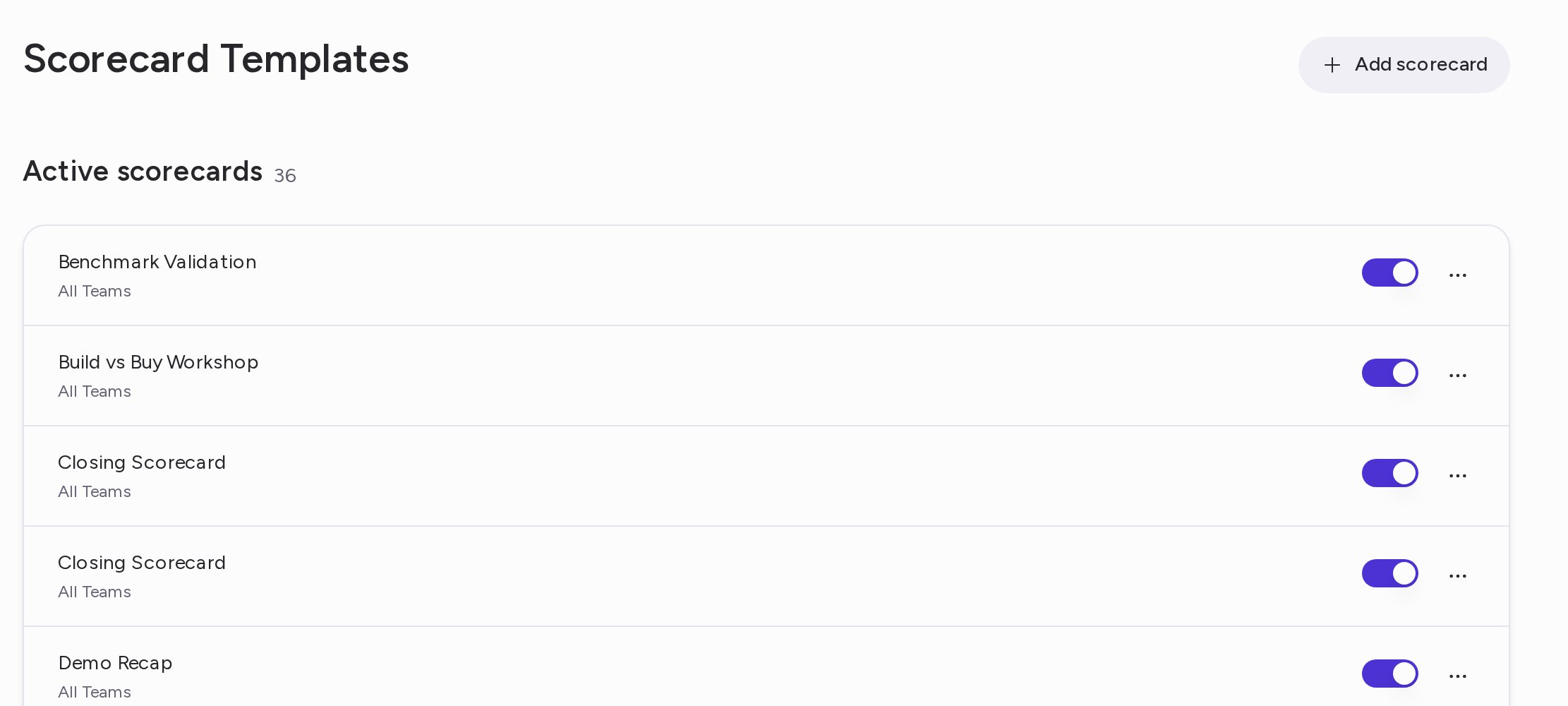
1. Open Scorecard Templates
- Click your name at the bottom of the sidebar and select Settings.
- Select Scorecard Templates in the settings menu.
2. Create the template
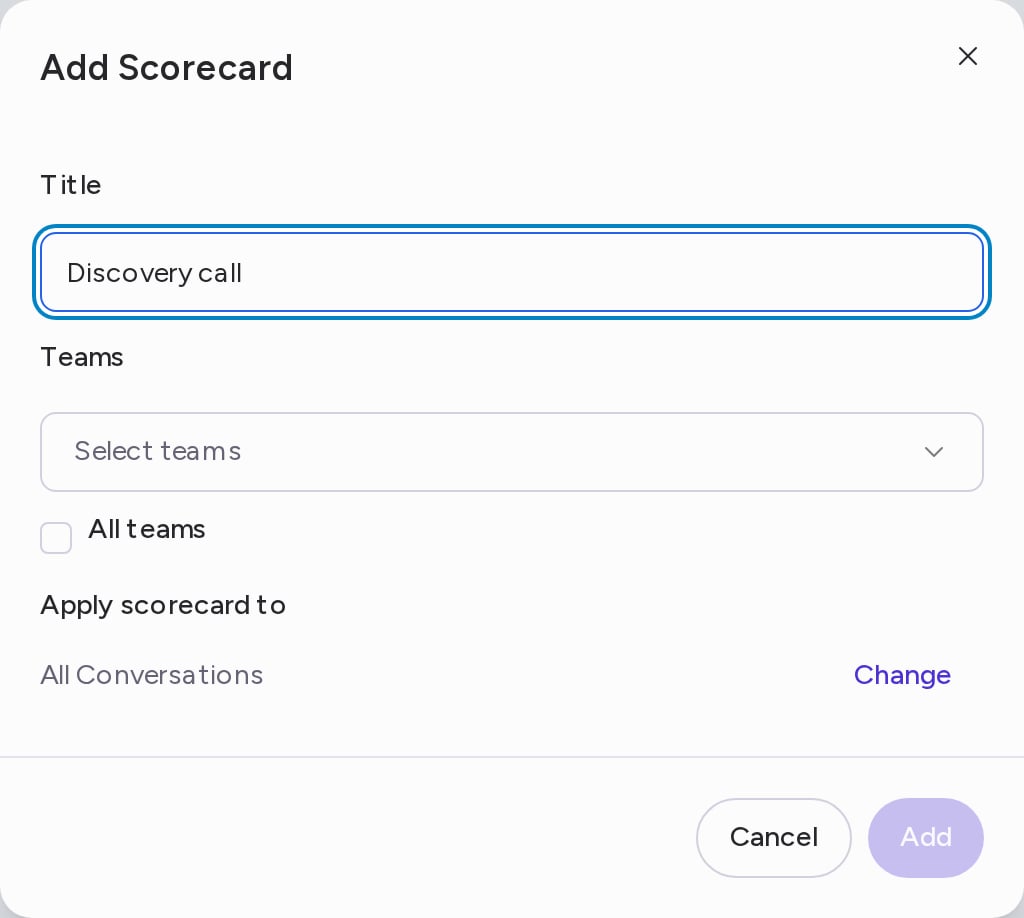
- Click Add scorecard.
- Enter a Title, for example Discovery Call.
- Under Teams, select the teams whose calls this template grades, or check All teams to include every current and future team. A call counts for the primary team of the rep who owns it.
- Apply scorecard to shows All Conversations, so every call from those teams is graded. To grade only calls with certain call tags, click Change:
- Next to Calls that match, choose all (a call needs every tag you pick) or any (one is enough). With all, you can pick one value per tag.
- Pick the tag values in Select call tags.
- Click Save.
- Click Add.
3. Set the scale
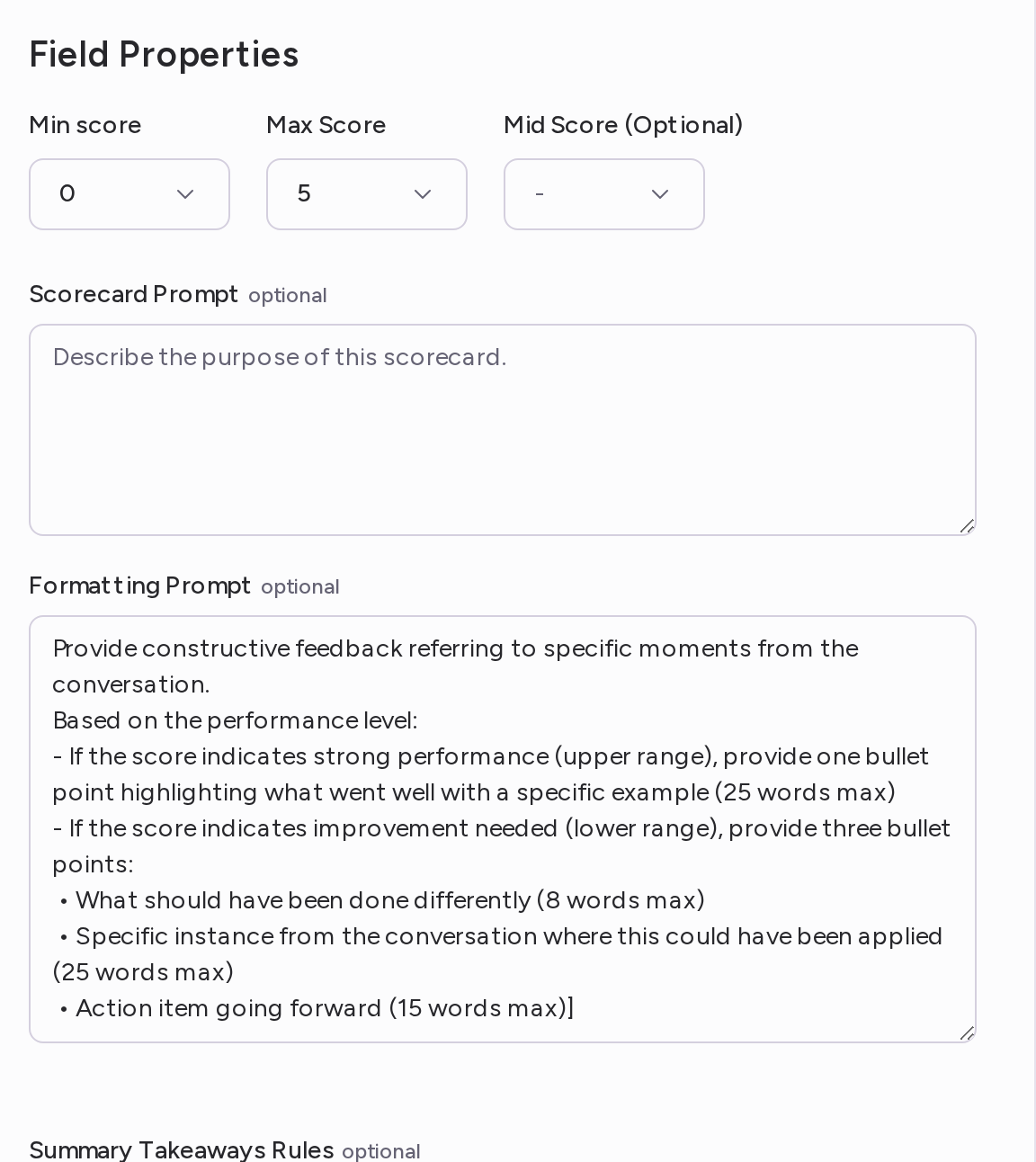
Under Field Properties, choose the Min score and the Max Score. New templates go from 1 to 5, and the maximum can go up to 100. To add a midpoint with its own description, pick a Mid Score (Optional). The scale applies to every field in the template. If you change it later, all fields switch to the new scale.4. Add fields
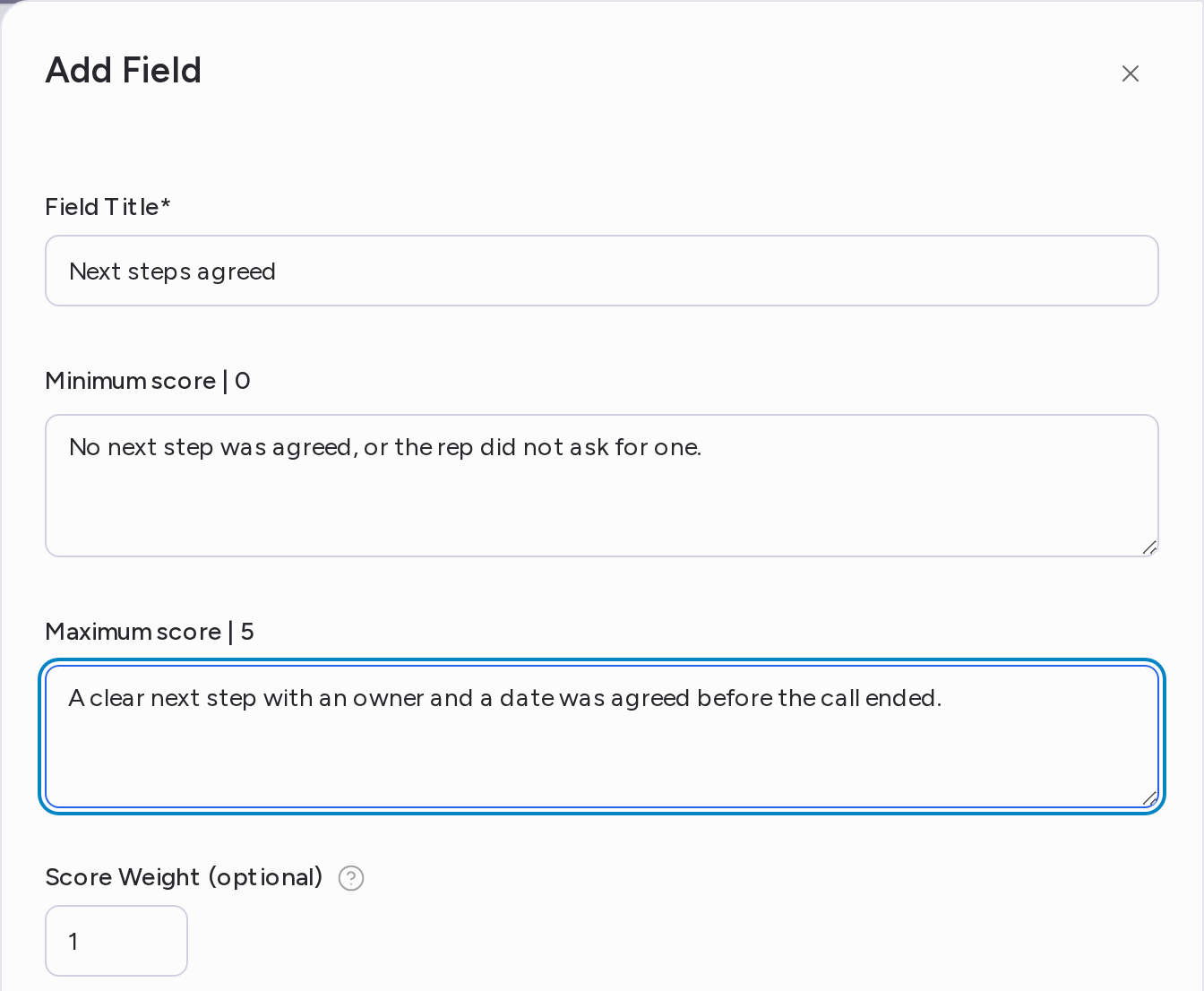
Each field is one criterion, such as a skill or behavior, that Attention grades on each call.- Click the + button next to Fields. The Add Field panel opens.
- Enter a Field Title, for example Identify Pain.
- Under Minimum score and Maximum score, describe what a call at each end of the scale looks like. Each box shows an example to start from. If the template has a mid score, describe Middle score too.
- (Optional) Change the Score Weight. Each field starts at 1. The template’s overall score is a weighted average, so a field with a higher weight counts more.
- Click Add.
5. Write the template prompts
Below Field Properties, three optional prompts apply to the whole template. Each one saves when you click outside the box.- Scorecard Prompt: describe the purpose of the scorecard, such as the type of call and what a good one looks like. Attention takes it into account for every field.
- Formatting Prompt: the format of the feedback under each field’s score. Leave it blank to use Attention’s default format. To replace Attention’s formatting instructions entirely with yours, turn on Use only this format prompt.
- Summary Takeaways Rules: the rules for the short takeaways that summarize the scorecard on a call. Leave it blank to use the default rules.
6. Test a field
The Add Field and Edit Field panels end with Test your prompt, which runs the field on a past call before you save it.- Once the field has a title and its score descriptions, choose a call in Select Conversation. Type to search for it.
- Click Test.
7. Turn a template on or off
On the Scorecard Templates page (click All scorecard templates to go back), each template has a switch. Turn it off to stop grading calls with that template, and on again to resume.8. Edit, duplicate or delete a template
On the template’s page, open the ⋯ menu next to its title:- Edit opens the Edit Scorecard dialog. Change the title, the teams or the call tags, then click Update. Interaction type sets what the template grades: Conversation (calls, the default) or Email.
- Duplicate creates a copy named after the original with (Copy) at the end and opens it. The copy keeps the teams, call tags, fields and prompts, and it is on if the original is.
- Delete opens Delete scorecard template. Click Delete scorecard to confirm. The template stops grading new calls, and the results it already produced stay available for reporting. You can’t restore a deleted template.